On This Day in Napoleonic History – 20 June 1792

211.5_Les_Tuileries_vues_du_LouvreNapoleon witnesses Parisian mob invade the Tuileries Palace

Napoleon was in a restaurant on Rue Saint-Honoré with his future secretary Louis Antoine Fauvelet de Bourrienne when he saw heavily armed crowd marching towards the palace. Two days later, Napoleon described the historic scenes to his brother Joseph: ‘Between 7 and 8 thousand men armed with pikes, axes, swords, guns, spit, sharpened sticks went to the king. They broke down the gates, entered the palace, pointed the cannon at the king’s apartment, threw four doors to the ground and presented the king with tow cockades – one white, the Bourbon colour, and the other tricolour. They made him choose. All this is unconstitutional and sets a dangerous precedent.’

Bourrienne claimed that Napoleon later said: ‘What madness. How could they allow that rabble to enter? Why do they not sweep away 4 or 5 hundred of them with cannon? Then the rest will take themselves away very quickly.’ The humiliation of the royal family on that occasion further lowered the monarchy in Napoleon’s estimation. Although he supported the Revolution, he couldn’t understand why Louis XVI would meekly allow himself to be humiliated.
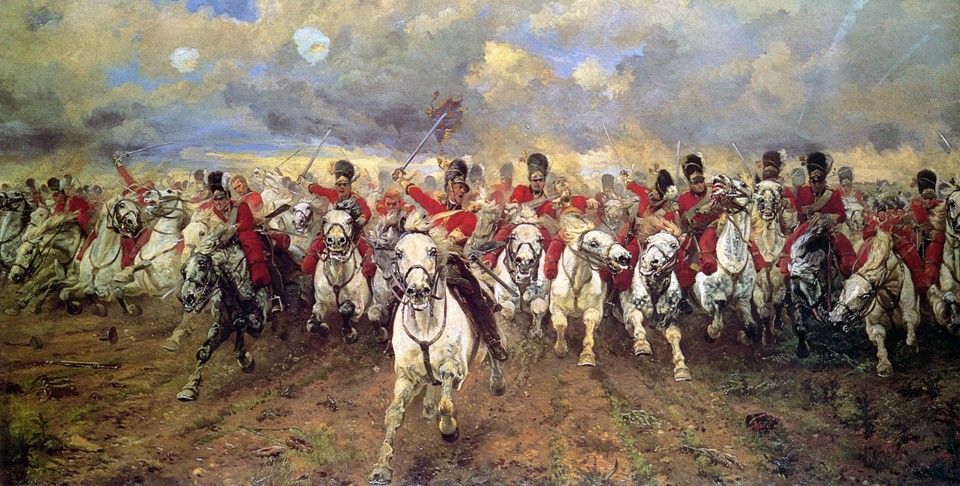
On This Day in Napoleonic History – 18 June 1815

lead_960Battle of Waterloo

Napoleon thus described his Waterloo campaign: ‘I sensed that Fortune was abandoning me. I no longer had in me the feeling of ultimate success. And if one is not prepared to take risks when the time is right, one ends up doing nothing.’ He added, ‘In war, the game is always with him who commits the fewest faults.’ In the Waterloo campaign, the general who committed the fewest faults was Wellington.

Waterloo is the costliest single battle of the Napoleonic Wars after Borodino. ‘Incomprehensible day,’ Napoleon would later say.

On This Day in Napoleonic History – 16 June 1815

16Napoleon splits his force before the Battle of Waterloo
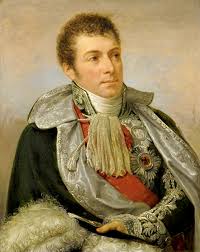
‘Now then, Grouchy, follow up those Prussians. Give them a touch of cold steel in their kidneys,’ said Napoleon to Marshal Emmanuel de Grouchy, thereby committing one of his gravest mistakes at Waterloo. Grouchy was sent away with 33,000 men and 96 guns to follow the Prussian army.

By splitting his force a day before he anticipated a major battle against Wellington, Napoleon broke one of his own military maxims:  ‘No force should be detached on the eve of battle because affairs may change during the night either by the retreat of the enemy or by the arrival of fresh reinforcements.’ It had certainly proved a devastating decision for the French.

On This Day in Napoleonic History – 15 June 1815

15Louis-Alexandre Berthier dies

Marshal Berthier, Napoleon’s faithful Chief of Staff, fell to his death from a window on the third floor of his Bamberg castle. Although many historians see foul play in the way Berthier had died, it is unknown whether it was suicide, murder or an accident.

For nearly two decades Berthier had translated the Emperor’s wishes into decisive military orders, making the greatest French victories possible. Berthier’s absence over the coming weeks was a serious blow to Napoleon and the Emperor himself later claimed that he had dire need of Berthier’s services in 1815 and that, had he been present, the French would have triumphed at Waterloo. ‘As Chief of Staff, Berthier has no equal,’ said Napoleon.

On This Day in Napoleonic History – 14 June 1800

14Battle of Marengo

The battle was fought during the War of the Second Coalition between the French and Austrian forces. Marengo was a surprise attack by the Austrians that almost resulted in French defeat, which in turn could have led to the overthrow of the Consulate. The night before the battle, the Austrians slept without bivouac fires to mislead the French as to their positions and numbers. When the sun came up, 15,000 French soldiers with only 15 guns faced 23,900 Austrian infantry, 5,200 cavalry and 92 guns. By noon the French were pounded by cannon and musket shot and were running low on ammunition. By 2 PM Marengo had fallen.

Napoleon sent desperate word to General Louis Desaix, who was marching south to Novi Ligure with 6,000 men, ordering him to return as quickly as possible. ‘I had thought to attack the enemy. Instead, it was he that attacked me,’ read Napoleon’s message. ‘In the name of God, come back if you still can.’ Fortunately for Napoleon, Desaix was severely delayed by the swelling river. He marched to the sound of the guns and turned the certain defeat into a brilliant victory.

As was his usual custom, Napoleon was to be found in the fray of battle. ‘The Consul seemed to brave death,’ recalled one of his officers. ‘And to be near it, for the bullets were seen more than once to disturb the ground between his horse’s legs.’ He encouraged his soldiers with cries of ‘Soldiers, remember it is my custom to bivouac on the field of battle!’ Austrians fled in disorder and the French indeed slept that night on the field of battle.

It was at the most triumphant moment that Desaix was struck in the chest and killed. ‘Why am I not allowed to weep?’ exclaimed grief-stricken Napoleon. Later he would say of Marengo, ‘The fate of the battle is the result of a single instant, a thought.’

Marengo confirmed Napoleon in his position as the First Consul and contributed to the myth of his invincibility.

On This Day in Napoleonic History – 12 June 1804

12Deliberations regarding Napoleon’s coronation

The new Imperial Council, which was essentially the old Conseil d’État, met at St Cloud to determine the format of Napoleon’s coronation. It was then that Cathédrale Notre Dame de Paris was decided upon as a possible location. Napoleon wanted his coronation to be held on 9 November, the 5th anniversary of Brumaire coup, while the Pope demanded it took place on Christmas day when Charlemagne was crowned in 800 AD. As a compromise, the date of 2 December was chosen.

The heraldic insignia and the official badge of the Empire were also discussed, with cockerel (the emblem of Ancient Gaul), eagle, lion, elephant, bee and oak tree proposed. Even the Bourbon’s fleur-de-lis was suggested but later dismissed.

‘The cock belongs to the farmyard, it’s far too feeble a creature,’ said Napoleon. No vote was taken but Napoleon chose the lion. The council agreed to keep the words French Republic on the coinage and it would remain there until 1809. As soon as the meeting was finished, Napoleon changed his mind from the lion to the eagle with spread wings on the basis that it affirms Imperial dignity and recalls Charlmagne and Ancient Rome. The bee was also chosen as the symbol of immortality and resurrection and a link between the new dynasty and the very origins of French royalty, since golden bees were discovered in 1653 in Tournai in the tomb of Childeric I, founder of the Merovingian dynasty in 457.

On This Day in Napoleonic History – 11 June 1796

17Napoleon suspects Josephine of having an affair

Although no rumour about Josephine’s affair had as yet reached Napoleon in Italy, from his wife’s long silences and her coldness when she did write he began to suspect that all was not well. He wrote to Paul Barras, ‘I’m in despair that my wife does not come to me. She has some lover who keeps her in Paris. I curse all women but I embrace my good friends with all my heart.’

He bombarded Josephine with letters incessantly, ranting that he was almost resigned to the fact that she no longer loved him if indeed she ever had. By June 15th he was telling her: ‘I could not tolerate a lover, much less allow you to take one.’

His suspicions were not without ground. Josephine was in the midst of a passionate and very public affair with Hippolyte Charles, a lieutenant in a Hussar regiment.

On This Day in Napoleonic History – 10 June 1798

maltaNapoleon’s fleet reaches Malta on the way to Egypt

Napoleon dispatched Jean-Andoche Junot to the Grand Master of the Knights of St John to demand the island’s surrender. The pro-French Knights refused to fight and their Maltese subjects were in revolt, and so, two days later, the harbour was opened to the French.

Napoleon only spent six days on the island but he was his usual flurry of activity. He expelled all of the 14 Knights and replaced the island’s medieval administration with the governing council, dissolved the monasteries, installed street lighting and paving, freed all political prisoners, reformed the hospitals, hostel service and university. He also abolished slavery, feudalism, titles of nobility and the Arms of the Order of the Knights, opened the ghettos, freed the Jews and allowed them to build a synagogue.

‘We now possess,’ he wrote to the Directory, ‘the strongest place in Europe and it will cost a good deal to dislodge us.’

On This Day in Napoleonic History – 5 June 1806

louis-bonaparte-1Napoleon appoints his brother, Louis Bonaparte, as the King of Holland

Louis identified with his new subjects and tried to be a good monarch. He continued the unification of the country from federated provinces, abolished ancient guilds in 1808 and rationalised justice system in 1809. ‘From the moment I set foot on Dutch soil, I became Dutch,’

Louis once said. He went as far as putting the interests of Holland before those of France, which led to an increasingly deep conflict with his brother Napoleon that lasted four years, up until Louis’ forced abdication. Napoleon wrote hundreds of letters to Louis, reprimanding him for being too good-natured and demanding that Louis become a tough, uncompromising monarch that Napoleon needed: ‘If you continue to govern by whining, if you allow yourself to be bullied, you will be even less use to me than Grand Duke of Baden is. You tire me needlessly. Your ideas are narrow and you have little interest in common cause. Only women cry and complain. Men take action.’

Considering Napoleon’s low opinion of his brother’s leadership ability, it is surprising that Louis stayed on the throne for as long as he did.

On This Day in Napoleonic History – 1 June 1823

davoutLouis-Nicolas Davout dies in Paris

To his own disadvantage, Napoleon never really liked Davout, who was one of the few of his marshals who shined in independent command. Davout was also the only marshal who refused to swear loyalty to the Bourbons after Napoleon’s downfall in 1814. He was underused in the 1813 campaign and on the day of Waterloo, having been appointed minister of war by Napoleon, was signing documents instead of fighting the Allies. Years later, Napoleon regretted not using Davout on the field of battle.